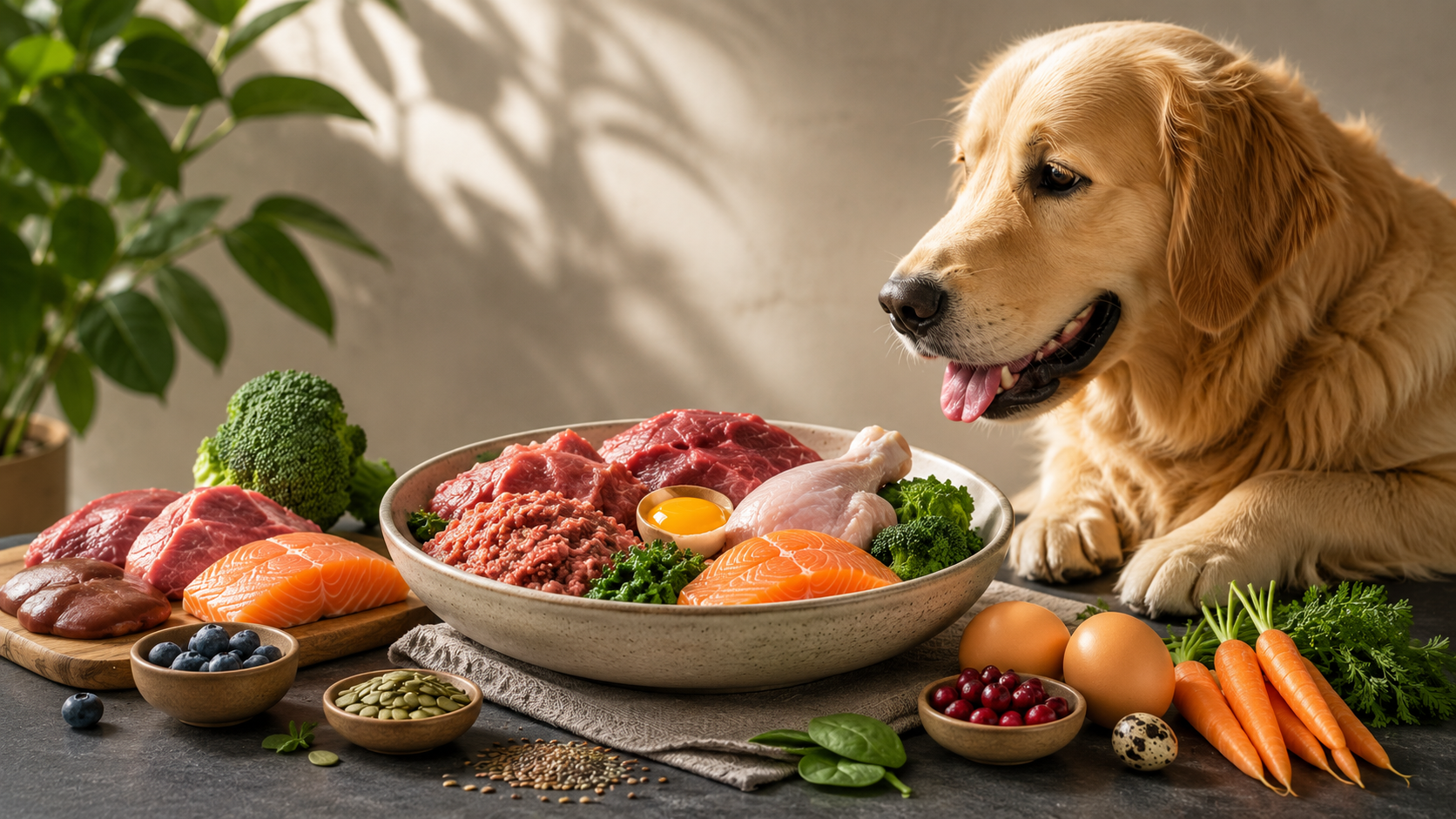
Raw feeding, commonly known as the BARF (Biologically Appropriate Raw Food) diet, is becoming increasingly popular among dog owners who want to provide a more natural and nutritious lifestyle for their pets. Instead of relying entirely on processed commercial kibble, raw feeding focuses on fresh meat, edible bones, organs, vegetables, fruits, and other natural ingredients that closely resemble the diet of wild canines.
⭐ Quick Overview
✔ Natural ingredients
✔ High-quality protein
✔ Better digestion
✔ Healthier skin & coat
✔ Strong muscles
✔ Improved dental health
Table of Contents
- What is Raw Feeding?
- Why Pet Owners Choose Raw Diets
- Benefits of Raw Feeding
- Possible Risks
- Foods Included in a Raw Diet
- Foods You Should Never Feed
- How to Transition Your Dog
- Sample Feeding Plan
- Frequently Asked Questions
- Final Thoughts
What is Raw Feeding?
Raw feeding is a nutritional approach that provides dogs with fresh, uncooked foods instead of heavily processed commercial diets. A complete raw meal usually contains muscle meat, raw edible bones, organ meats, vegetables, fruits, eggs, and healthy oils. Every ingredient contributes important nutrients that support your dog's growth, immune system, digestion, and long-term health.
Unlike processed kibble, which often contains preservatives and fillers, raw diets focus on natural ingredients with minimal processing. The goal is to provide balanced nutrition while allowing dogs to consume foods that are closer to what their ancestors ate in the wild.
Important Note
A raw diet should always be balanced. Feeding only raw meat without bones, organs, vitamins, and minerals may lead to nutritional deficiencies over time.
Why Do Dog Owners Choose Raw Feeding?
Many pet owners report positive changes after switching to a properly balanced raw diet. Although every dog is different, the following benefits are commonly observed.
Healthier Coat
Natural fats and Omega-3 fatty acids help improve skin condition while giving the coat a softer and shinier appearance.
Better Digestion
Fresh ingredients are generally easier for many dogs to digest, producing smaller and firmer stools.
Higher Energy
Balanced protein and healthy fats provide long-lasting energy throughout the day.
Cleaner Teeth
Raw meaty bones may help reduce plaque buildup while encouraging healthy chewing habits.
Major Benefits of Raw Feeding
1. Improved Skin and Coat
Healthy fats found in fish, chicken, and beef provide essential fatty acids that nourish the skin. Dogs eating balanced raw diets often develop shinier coats with less shedding and reduced skin irritation.
2. Stronger Muscles
Fresh animal protein supplies amino acids that help maintain lean muscle mass. Active dogs especially benefit from high-quality protein sources.
3. Better Weight Management
Balanced raw meals are usually lower in unnecessary fillers and carbohydrates, making it easier to maintain a healthy body weight.
4. Improved Dental Health
Chewing appropriate raw meaty bones may naturally scrape plaque from teeth while strengthening jaw muscles. Always choose bones that are suitable for your dog's size and never feed cooked bones.
5. Stronger Immune System
Fresh fruits and vegetables provide antioxidants, vitamins, and minerals that support normal immune function and help protect cells from oxidative stress.
Foods Included in a Balanced Raw Diet
A successful raw feeding plan is not based on meat alone. Dogs require a variety of ingredients to receive complete nutrition. Every meal should include different food groups that work together to provide protein, vitamins, minerals, healthy fats, and fiber.
| Food Group | Examples | Benefits |
|---|---|---|
| Muscle Meat | Chicken, Beef, Turkey, Lamb | High-quality protein for muscles and energy. |
| Raw Bones | Chicken Neck, Chicken Wings, Duck Neck | Calcium, phosphorus, and dental health. |
| Organ Meat | Liver, Kidney, Heart | Rich in vitamins A, B, iron, and zinc. |
| Vegetables | Carrots, Spinach, Pumpkin, Broccoli | Fiber, antioxidants, and vitamins. |
| Fruits | Blueberries, Apples, Bananas | Natural antioxidants and immune support. |
| Healthy Fats | Fish Oil, Salmon Oil | Healthy skin, coat, and brain function. |
Foods You Should Never Feed
Although many fresh foods are healthy, some common household foods are dangerous or even toxic for dogs. These should always be avoided.
- ❌ Chocolate
- ❌ Grapes and Raisins
- ❌ Onions and Garlic
- ❌ Alcohol
- ❌ Coffee and Tea
- ❌ Excess Salt
- ❌ Xylitol (Artificial Sweetener)
- ❌ Cooked Bones
- ❌ Moldy Food
Safety Warning
Cooked bones should never be fed because they become brittle and can splinter, increasing the risk of choking or serious internal injuries.
How to Transition Your Dog to a Raw Diet
Changing your dog's food suddenly may upset the digestive system. A gradual transition helps the stomach adjust to new ingredients while reducing digestive discomfort.
Week 1
Replace approximately 25% of your dog's normal food with raw food while monitoring stool quality and appetite.
Week 2
Increase raw food to about 50% of each meal. Continue observing digestion and overall energy levels.
Week 3
Feed approximately 75% raw food and 25% previous food. Introduce additional vegetables and organ meats gradually.
Week 4
Your dog can now move to a fully balanced raw diet if digestion remains healthy and your veterinarian has no concerns.
Daily Feeding Guide
The amount of food depends on age, activity level, and body weight. The following table provides a general feeding guideline.
| Dog Weight | Daily Food Amount |
|---|---|
| 5 kg | 150–200 g |
| 10 kg | 250–300 g |
| 20 kg | 450–600 g |
| 30 kg | 700–900 g |
| 40 kg | 900–1200 g |
These values are general recommendations only. Puppies, highly active dogs, pregnant females, and dogs with medical conditions often require different feeding amounts.
Sample Daily Raw Meal Plan
Breakfast
- Chicken breast
- Raw chicken neck
- Carrots
- Fish oil supplement
Lunch
- Lean beef
- Pumpkin
- Spinach
Dinner
- Turkey meat
- Chicken liver
- Blueberries
- Egg
Food Safety and Hygiene
Because raw food may naturally contain bacteria, safe food handling practices are extremely important. Wash your hands before and after preparing meals, disinfect food preparation surfaces, clean bowls after every meal, and store raw meat in the refrigerator or freezer until needed.
Always purchase fresh meat from trusted suppliers and discard any food that appears spoiled or has an unpleasant odor.
Expert Tips
- ✔ Rotate protein sources every few weeks.
- ✔ Feed a balanced diet instead of meat only.
- ✔ Monitor your dog's body weight monthly.
- ✔ Keep fresh drinking water available at all times.
- ✔ Schedule regular veterinary health examinations.
- ✔ Introduce new foods gradually.
- ✔ Freeze meat properly before feeding.
- ✔ Purchase ingredients from reliable suppliers.
Frequently Asked Questions (FAQs)
1. Is raw feeding safe for every dog?
A properly balanced raw diet can be suitable for many healthy dogs. However, puppies, senior dogs, pregnant dogs, and dogs with medical conditions should only begin a raw diet after consulting a veterinarian. Every dog has unique nutritional requirements, so professional guidance is always recommended before making significant dietary changes.
2. Can puppies eat a raw diet?
Yes. Puppies can eat a carefully balanced raw diet because they require high-quality protein, healthy fats, vitamins, and minerals to support rapid growth. Since puppies are still developing, nutritional balance is especially important.
3. How much raw food should I feed daily?
Adult dogs generally consume approximately 2–3% of their body weight each day, while puppies often require 5–8% depending on their age and growth stage. Activity level and health condition also influence feeding amounts.
4. Can raw feeding improve my dog's coat?
Many pet owners notice shinier coats and healthier skin after switching to a balanced raw diet. Healthy fats, especially Omega-3 fatty acids, help nourish the skin and coat naturally.
5. Is raw feeding expensive?
The cost depends on ingredient quality, where food is purchased, and your dog's size. Buying ingredients in bulk and preparing meals at home can significantly reduce expenses.
Common Myths About Raw Feeding
| Myth | Fact |
|---|---|
| Dogs only need meat. | A balanced raw diet also includes organs, bones, vegetables, healthy fats, and essential nutrients. |
| All bones are safe. | Cooked bones should never be fed because they can splinter and cause injuries. |
| Raw feeding automatically cures diseases. | Nutrition supports overall health but should never replace proper veterinary care. |
| Raw diets are impossible to prepare. | With planning, meal preparation becomes simple and can even be prepared weekly. |
Final Recommendations
Before changing your dog's diet, evaluate their age, activity level, body condition, and overall health. Select high-quality ingredients from trusted suppliers, maintain proper hygiene during food preparation, and monitor your pet's weight regularly. Introducing new foods gradually helps reduce digestive upset while allowing your dog to adapt comfortably.
A balanced raw feeding plan is based on variety rather than feeding the same ingredients every day. Rotating protein sources such as chicken, turkey, beef, lamb, and fish provides a wider range of nutrients and reduces nutritional gaps over time.
Conclusion
Raw feeding is more than simply replacing commercial dog food with raw meat. It is a nutritional approach that focuses on providing fresh, natural, and balanced meals designed to support a dog's overall health and well-being. When carefully planned, a raw diet may contribute to improved digestion, healthier skin and coat, stronger muscles, better dental hygiene, and increased energy.
Success with raw feeding requires proper planning, nutritional balance, safe food handling practices, and regular veterinary checkups. Every dog is unique, and what works well for one may need adjustment for another. By learning about your pet's nutritional needs and making informed decisions, you can help provide a healthy and enjoyable lifestyle throughout every stage of life.
Key Takeaways
- ✔ Feed a balanced combination of meat, bones, organs, vegetables, and healthy fats.
- ✔ Introduce raw food gradually over several weeks.
- ✔ Practice proper food hygiene and safe storage.
- ✔ Monitor your dog's weight and overall health regularly.
- ✔ Always provide fresh drinking water.
- ✔ Consult your veterinarian before making major dietary changes.