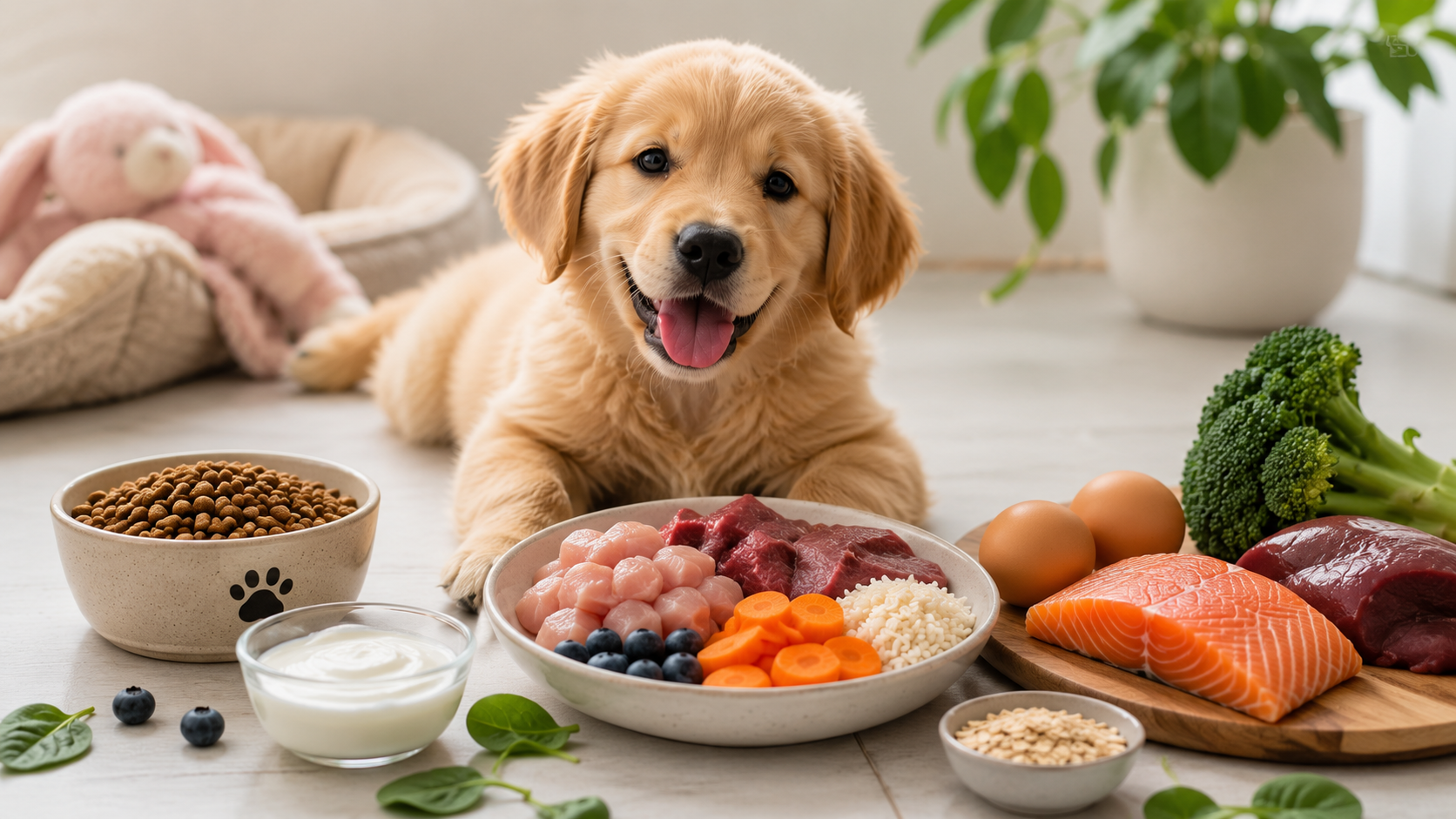
Give Your Puppy The Best Start In Life
Bringing home a puppy is one of life's most exciting moments. Every puppy depends on proper nutrition during its first year because this period is responsible for rapid physical and mental growth. Healthy food supplies the protein, vitamins, minerals, healthy fats and energy required to build strong muscles, healthy bones, a powerful immune system and a shiny coat. A balanced diet also supports brain development, healthy digestion and steady growth while helping reduce the risk of obesity and nutritional deficiencies later in life. Whether your puppy is a Labrador, German Shepherd, Golden Retriever, Poodle, Beagle, Siberian Husky, or a mixed breed, the nutritional principles explained in this guide will help you make better feeding decisions. Unlike adult dogs, puppies require specially formulated food because their nutritional requirements are significantly higher. Throughout this guide, you'll discover everything from feeding schedules, portion sizes, essential nutrients, healthy treats, foods to avoid, sample meal plans, hydration tips, common mistakes, expert advice, and frequently asked questions. By following these recommendations, you can help your puppy enjoy healthy growth, maintain ideal body weight, develop strong bones, support healthy brain function, and build lifelong eating habits that contribute to a longer, healthier, and happier life.
Quick Puppy Nutrition Facts
- Growing puppies require more protein than adult dogs.
- Fresh drinking water should always be available.
- Puppies should eat several smaller meals each day.
- Sudden food changes may upset digestion.
- Balanced nutrition helps strengthen immunity.
- Healthy eating habits begin during the first year.
- Avoid feeding chocolate, grapes, onions and cooked bones.
- Choose food designed specifically for puppies.
Table of Contents
Why Puppy Nutrition is Important
The first year of a puppy's life is the most important stage of development. During this period, bones grow rapidly, muscles become stronger, the immune system develops, and the brain forms millions of new neural connections. Every meal your puppy eats provides the fuel required for these critical developmental processes. Without balanced nutrition, puppies may experience slow growth, weak bones, poor muscle development, digestive disorders, reduced immunity, and long-term health complications. Proper nutrition not only helps puppies grow, it also improves learning ability, supports healthy skin and coat, maintains ideal body weight, and reduces the risk of obesity later in life. High-quality puppy food contains carefully balanced amounts of protein, healthy fats, vitamins, minerals, fiber, and antioxidants. These nutrients work together to provide steady energy, healthy digestion, and proper organ development. Large breed puppies such as German Shepherds, Golden Retrievers, and Labradors require controlled calcium and phosphorus levels to support healthy bone growth, while smaller breeds often need more frequent meals because of their faster metabolism. Feeding a puppy consistently, using measured portions, and providing clean drinking water are simple habits that make a significant difference throughout adulthood. Healthy nutrition today creates a healthier dog tomorrow.
Expert Tip
Choose puppy food that lists a high-quality animal protein such as chicken, turkey, lamb, or fish as the first ingredient. Avoid foods containing excessive artificial colours, flavours, fillers, or unnecessary preservatives. Premium-quality puppy food may cost slightly more, but it provides better nutrition, improves digestion, supports healthy growth, and can reduce future veterinary expenses.
⚠ Important Warning
Never feed your puppy chocolate, grapes, raisins, onions, garlic, xylitol, alcohol, caffeine, or cooked bones. These foods may cause serious poisoning, digestive blockage, organ damage, or even become life-threatening. If your puppy accidentally consumes any toxic food, contact your veterinarian immediately.
Essential Nutrients Every Puppy Needs
Every puppy requires a balanced combination of nutrients to support healthy growth and development. Each nutrient performs a different function inside the body. When these nutrients are supplied in the correct amount, puppies grow into stronger, healthier, and more active adult dogs. Below are the most important nutrients every growing puppy needs.
High Quality Protein
Protein is the building block of muscles, skin, hair, organs and body tissues. Growing puppies require more protein than adult dogs because their bodies are constantly developing. Excellent protein sources include:
- Chicken
- Turkey
- Fish
- Lean Beef
- Eggs
- Lamb
Healthy Fats
Healthy fats provide concentrated energy and help absorb vitamins. Omega-3 and Omega-6 fatty acids support brain development, healthy skin, good eyesight, and a shiny coat. Healthy fat sources include:
- Fish Oil
- Salmon
- Sardines
- Chicken Fat
- Flaxseed Oil
Calcium & Phosphorus
Strong bones and healthy teeth depend on the correct balance between calcium and phosphorus. Too little calcium can weaken bones, while excessive calcium may cause developmental problems, especially in large breed puppies.
Vitamins & Minerals
Vitamins strengthen immunity, improve eyesight, maintain healthy skin, support metabolism and help puppies fight disease. Important vitamins include:
- Vitamin A
- Vitamin D
- Vitamin E
- Vitamin B Complex
- Zinc
- Iron
Nutrition Tip
Instead of buying foods based only on attractive packaging, always read the ingredient label. The first ingredient should be real animal protein, not corn, soy, or artificial fillers.
Daily Nutritional Requirements
Every puppy has different nutritional needs depending on age, breed, body weight and activity level. The following table shows the primary nutrients required for healthy development.
| Nutrient | Main Function | Good Sources |
|---|---|---|
| Protein | Muscle Growth | Chicken, Fish, Eggs |
| Healthy Fats | Brain Development | Fish Oil, Salmon |
| Calcium | Strong Bones | Dairy, Balanced Puppy Food |
| Phosphorus | Healthy Teeth | Meat, Fish |
| Fiber | Digestion | Pumpkin, Vegetables |
| Vitamin A | Eyesight | Carrots |
| Vitamin D | Bone Development | Fish |
| Omega-3 | Brain Health | Salmon |
Best Foods For Puppies
Choosing nutritious food during puppyhood is one of the greatest investments you can make. A balanced diet supports healthy growth, improves digestion, strengthens immunity, and provides energy for everyday play and learning.
Chicken
Lean protein that supports muscle development while remaining easy to digest.
Fish
Excellent source of Omega-3 fatty acids that support brain function, eyesight and healthy skin.
Eggs
Contain complete protein, healthy fats, and essential vitamins.
Pumpkin
Natural source of fiber that supports digestion and helps prevent constipation.
Carrots
Rich in Vitamin A, good for eyesight, healthy skin and dental health.
Sweet Potato
Healthy carbohydrates provide long-lasting energy for active puppies.
✔ Veterinary Recommendation
Whenever possible, choose premium puppy food approved for growth and appropriate for your puppy's breed size. Large breed puppies often require specially formulated diets to support controlled bone growth.
Foods You Should Never Feed Your Puppy
Not every food that is safe for humans is safe for puppies. Some everyday foods contain substances that can seriously harm your puppy's digestive system, nervous system, heart, liver, or kidneys. Even small amounts of certain foods may lead to poisoning, vomiting, diarrhea, seizures, or emergency veterinary treatment. Learning which foods are dangerous is one of the most important responsibilities of every puppy owner.
| Food | Why It Is Dangerous |
|---|---|
| Chocolate | Contains theobromine which is toxic to dogs. |
| Grapes & Raisins | May cause sudden kidney failure. |
| Onion & Garlic | Damage red blood cells and may cause anemia. |
| Coffee & Tea | High caffeine can affect the heart and nervous system. |
| Alcohol | Can damage the brain and liver. |
| Xylitol | Causes dangerous drops in blood sugar. |
| Cooked Bones | May splinter and damage the digestive tract. |
| Excess Salt | Can lead to dehydration and sodium poisoning. |
Emergency Advice
If your puppy accidentally eats any toxic food, do not wait for symptoms to appear. Contact your veterinarian immediately because early treatment greatly improves recovery.
Puppy Feeding Schedule
Young puppies have small stomachs but very high energy needs. Instead of feeding one large meal, divide food into several smaller meals throughout the day. A regular feeding routine supports digestion, improves nutrient absorption, and helps with house training.
| Age | Meals Per Day | Recommendation |
|---|---|---|
| 8–12 Weeks | 4 Meals | Small portions every few hours. |
| 3–6 Months | 3 Meals | Increase meal size gradually. |
| 6–12 Months | 2 Meals | Morning and Evening feeding. |
| 12+ Months | 2 Meals | Transition to adult feeding routine. |
Feeding Tip
Feed your puppy at the same time every day. Routine feeding improves digestion, creates healthy eating habits, and makes appetite changes easier to notice.
Sample Daily Meal Plan
The following meal plan is only an example. Portion sizes depend on your puppy's breed, age, activity level, and body weight. Always follow your veterinarian's advice or the feeding guide provided on the food packaging.
| Meal | Suggested Food |
|---|---|
| Breakfast | Boiled Chicken + Brown Rice + Fresh Water |
| Lunch | Turkey + Pumpkin + Carrots |
| Dinner | Fish + Sweet Potato + Green Beans |
| Healthy Snack | Apple Slices (Seedless) or Blueberries |
Healthy Treat Ideas
Treats are excellent for training and rewarding good behaviour, but they should never replace a complete and balanced puppy diet. Experts generally recommend keeping treats below ten percent of your puppy's daily calorie intake.
Carrots
Crunchy, low in calories, and naturally rich in Vitamin A.
🫐 Blueberries
Packed with antioxidants that help support the immune system.
Apples
A healthy vitamin-rich snack. Always remove the seeds before feeding.
Cucumber
Refreshing, low-calorie, and helps keep puppies hydrated.
Importance Of Hydration
Water is just as important as food. A puppy's body contains a high percentage of water, and even mild dehydration can reduce energy, affect digestion, and increase the risk of illness. Always provide unlimited access to clean, fresh drinking water. Replace the water several times each day, especially during hot weather, after exercise, or following outdoor play.
Hydration Tip
Wash your puppy's water bowl every day. Clean bowls help prevent bacteria buildup and encourage puppies to drink more water.
Common Feeding Mistakes
Many puppy owners unknowingly make feeding mistakes that can affect healthy growth. Understanding these common errors helps build better feeding habits and reduces the risk of future health problems.
Overfeeding
Giving excessive food may lead to obesity, joint stress and unnecessary weight gain. Always measure meals according to your puppy's age, weight and activity level.
⚖ Underfeeding
Too little food can slow healthy growth, reduce energy levels and weaken immunity. Growing puppies require adequate nutrition every day.
Too Many Treats
Treats should never replace complete meals. Too many treats increase calories and reduce appetite for nutritious food.
Sudden Food Changes
Changing food overnight may cause vomiting, diarrhea and stomach upset. Always transition gradually over 7–10 days.
⚠ Avoid Free Feeding
Leaving food available all day encourages overeating, makes portion control difficult, and may contribute to obesity. Scheduled feeding is a healthier option.
Healthy Lifestyle Tips
Proper nutrition works best when combined with exercise, quality sleep, fresh water and regular veterinary care. Healthy habits developed during puppyhood often continue throughout adulthood.
Daily Exercise
Regular play sessions improve muscle development, coordination and mental stimulation.
💧 Fresh Water
Keep clean drinking water available throughout the day.
Quality Sleep
Growing puppies require plenty of sleep because much of their development occurs while resting.
Veterinary Checkups
Routine health examinations help monitor growth, vaccinations, parasite control and overall wellbeing.
Expert Recommendation
Monitor your puppy's body condition every month. Healthy puppies should have a visible waist, good energy levels and steady weight gain without becoming overweight.
Frequently Asked Questions
1. How many times should I feed my puppy?
Young puppies generally require four meals daily. As they grow, meal frequency gradually reduces to two meals per day.
2. Can puppies eat homemade food?
Yes, provided the meals are nutritionally balanced. Consult your veterinarian before feeding homemade diets on a regular basis.
3. Is milk good for puppies?
Most puppies do not digest cow's milk well after weaning. Fresh drinking water is usually the best choice.
4. When should I switch to adult dog food?
Most dogs transition between 12 and 18 months, depending on breed and size.
5. Are raw eggs safe?
Cooked eggs are generally considered a safer option. Discuss raw feeding with your veterinarian first.
6. Can puppies eat fruit?
Many fruits such as apples (without seeds), blueberries and bananas can be offered in small amounts as occasional treats.
Conclusion
Proper puppy nutrition is one of the greatest investments you can make in your dog's future health. Balanced meals rich in quality protein, healthy fats, vitamins, minerals and fresh water support healthy growth, brain development, strong bones, healthy digestion and lifelong wellbeing. Every puppy is unique. Monitor body weight, energy level, coat quality, appetite and overall health, then adjust feeding amounts according to your veterinarian's recommendations. Good nutrition combined with exercise, love and regular healthcare helps every puppy become a healthy, active and happy companion.
Key Takeaways
- Feed high-quality puppy food.
- Maintain a regular feeding schedule.
- Provide fresh water at all times.
- Avoid toxic human foods.
- Limit treats.
- Exercise every day.
- Visit your veterinarian regularly.
- Monitor healthy weight and growth.